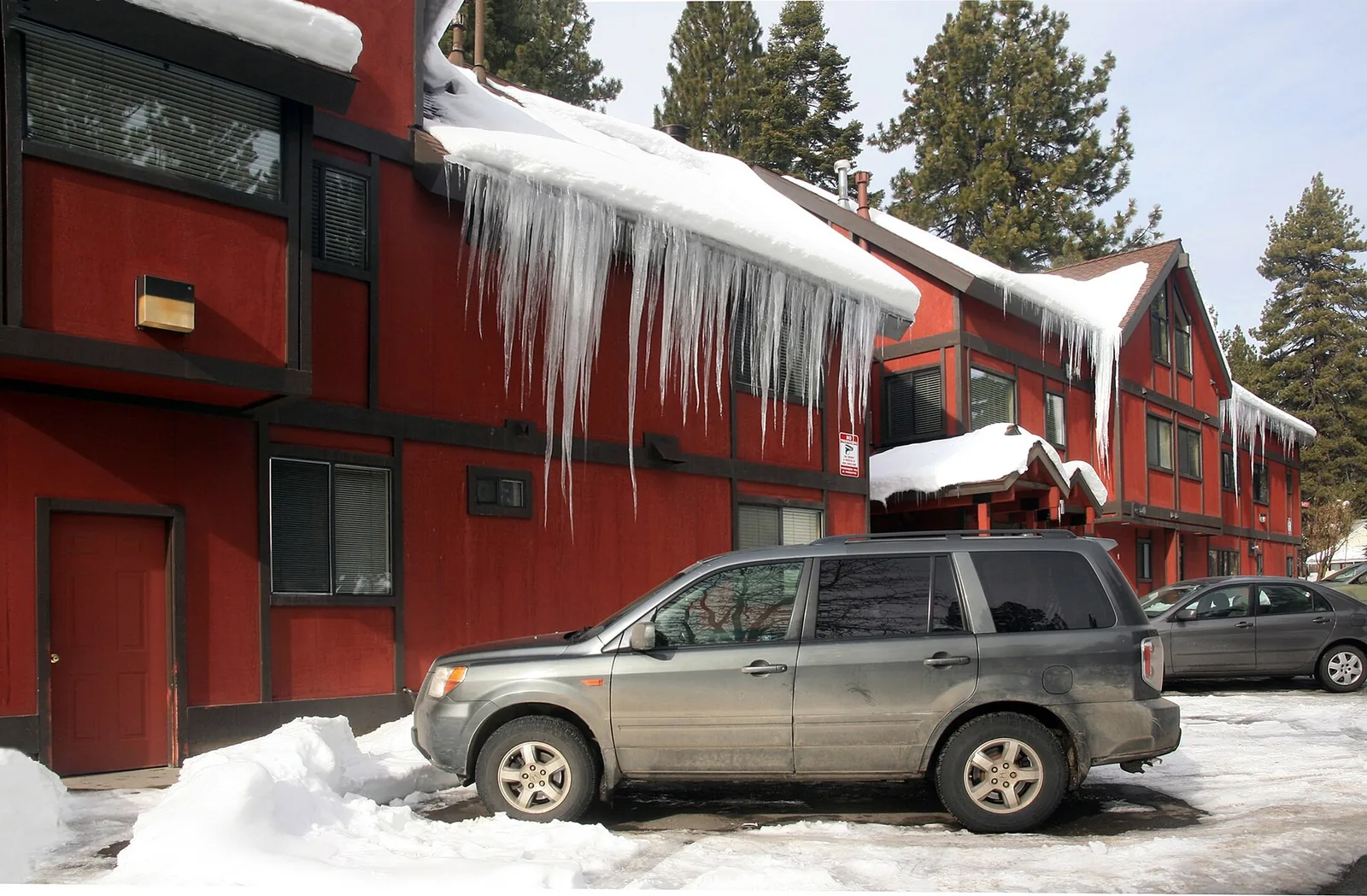
From the week before Thanksgiving to the first warm days of March, the people driving past your sign change. Families head for the grandparents' house, retirees point the car south, truck drivers haul the freight that stocks the stores, and utility and road crews go wherever the work and the weather send them. Every one of those drivers can be a full-rate, direct booking for an independent motel, and most of them will find you the same way: a phone, a map and a search typed at the end of a long day. This is our winter plan for a drive-up motel. It starts with who is actually on the road, uses the federal rules and the published numbers that shape when they stop, and ends with what your website and your Google profile need to show so those drivers book with you instead of the place a mile up the road.
Who is on the road between Thanksgiving and March
Summer has one big customer: the vacationer. Winter has five, and each wants something a little different from you.
The first is the holiday family. They travel in short, intense waves around Thanksgiving, Christmas and New Year's, and they mostly drive. They book late, often from the road, and they care about two beds, a safe parking spot for a loaded car and a fair price on a night when every room in town seems to be climbing.
The second is the snowbird, the retiree or remote worker who spends the cold months in Florida, the Gulf Coast or the desert Southwest. They drive down in the fall and back up in the spring, usually over two or three days, and they tend to stop at the same places year after year once they find one they like.
The third is the truck driver. Freight moves all winter, and federal rules decide when a driver has to stop for the night. A motel that can take a rig, or at least a tractor, has something a lot of drivers are hunting for.
The fourth is the work crew: line workers, road builders, pipeline and plant maintenance teams, fiber installers and cleanup contractors. They book blocks of rooms for weeks at a time, often through the slowest stretch of your year.
The fifth is the stranded driver. When ice closes a pass or snow slows an interstate to a crawl, people pull off early and need a room within a few miles, right now.
Motels have hosted all five for as long as there have been interstates. Today each group starts with a different search typed into a phone, and a website and Google profile written only for summer vacationers will miss most of them. The rest of this post takes the groups one at a time, then turns to the search results and pages that win them. If your property closes for part of the year, our post on running a seasonal motel website covers the off-season side, and the handbook's guide to raising occupancy has the year-round basics.
The holiday driving numbers
AAA publishes a travel forecast before each major holiday, and the last two tell you how much of the holiday season moves by car.
For Thanksgiving 2025, AAA's forecast, released November 17, 2025, projected 81.8 million Americans traveling 50 miles or more from home between Tuesday, November 25 and Monday, December 1. At least 73 million of them were expected to go by car. That is close to nine travelers in ten on the road, not in the air.
For the year-end holidays, AAA's forecast, released December 10, 2025, covered the 13 days from Saturday, December 20 through Thursday, January 1. It projected a record 122.4 million travelers, with 109.5 million of them driving. Domestic flights were expected to carry about 8 million people over the same stretch.
The same releases carried traffic guidance from INRIX, the traffic-data company, and the pattern is worth knowing. Before Thanksgiving, the Tuesday and Wednesday afternoons were expected to be the most congested, and Sunday was expected to be heavy for most of the day. Around Christmas, the weekend before the holiday and Friday, December 26 through Sunday, December 28 were expected to be the worst, while Christmas Day, New Year's Eve and New Year's Day themselves were expected to be light.
For a motel, slow traffic produces tired drivers, and tired drivers stop early. The nights inside those heavy windows are the nights your phone should be answered, your availability should be current and your booking button should work on a cracked screen in a dark parking lot.
AAA had not published its 2026 forecasts when we wrote this. If the usual timing holds, the Thanksgiving forecast is expected in mid-November and the year-end forecast in early to mid-December. The calendar is already set, though. According to the federal holiday schedule, Thanksgiving falls on Thursday, November 26, 2026, Christmas on Friday, December 25, and New Year's Day on Friday, January 1, 2027. Two Friday holidays mean two long weekends back to back, and that usually means two separate waves of drivers rather than one.
The snowbird corridors
Three interstates carry most of the long north-to-south winter drives in the East and South, and a fourth matters in the West.
Interstate 75 runs about 1,693 miles through Michigan, Ohio, Kentucky, Tennessee, Georgia and Florida, according to the Federal Highway Administration's route log. It is the natural line from Detroit, Toledo, Dayton and Cincinnati through Lexington, Knoxville, Chattanooga and Atlanta down to Tampa and Fort Myers. Interstate 95 runs about 1,905 miles through 15 states and the District of Columbia, from Maine to Miami, and it carries the Northeast down the Atlantic side to Jacksonville, Daytona, the Space Coast and South Florida. Interstate 10 runs about 2,458 miles through eight states from California to Florida, and it is the cross-country line for drivers heading to the Gulf Coast, Texas, Arizona and the California desert.
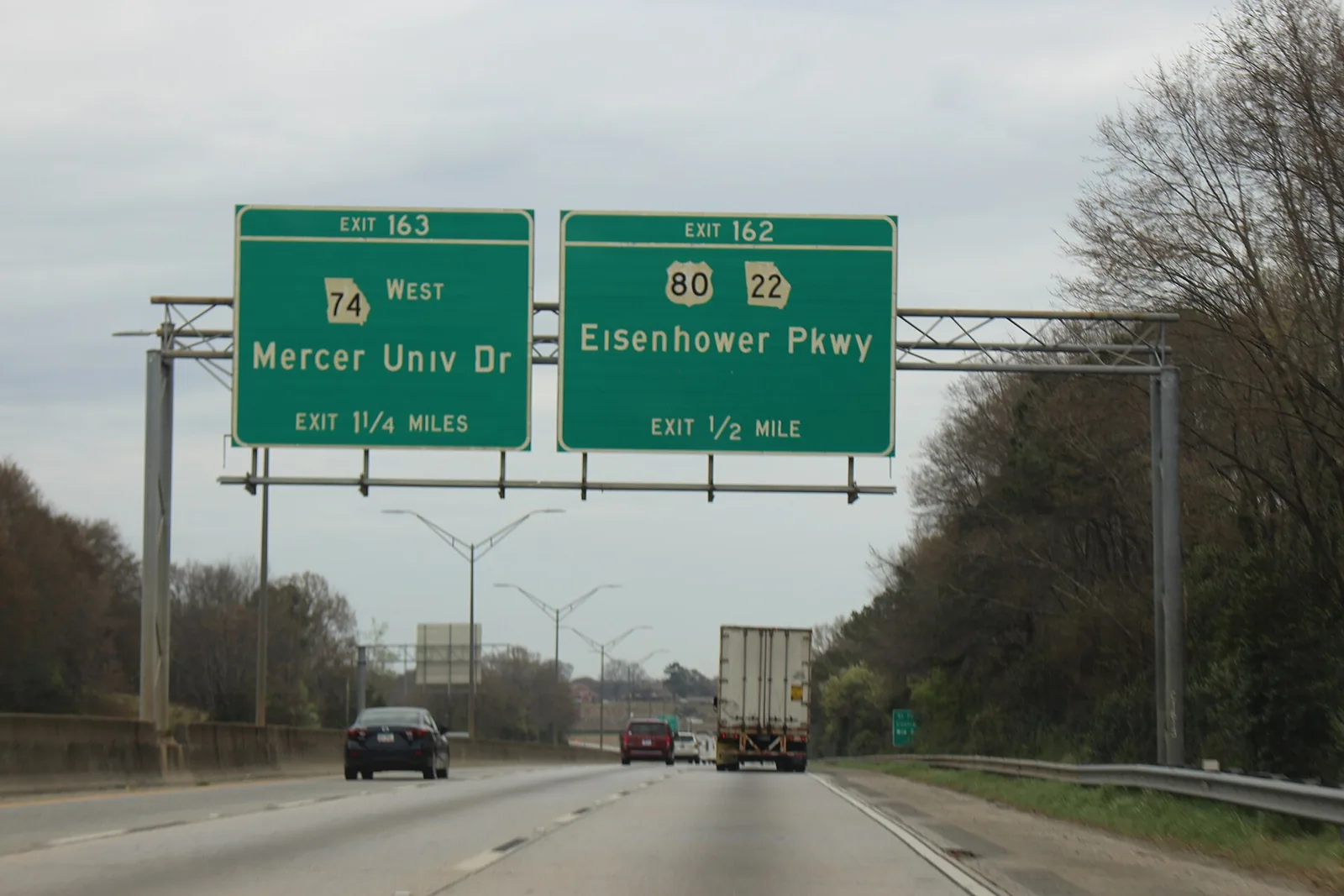
A snowbird driving from Ohio to Florida on I-75 or from New Jersey to Florida on I-95 is covering roughly a thousand miles or more, which most people split into two or three days at the wheel. That means one or two motel nights each way, on roughly the same dates every year. If your motel sits within a few minutes of an exit on one of these routes, the fall drive south and the spring drive north are two predictable little seasons of their own.
The other routes still count. Drivers from the Plains come down I-35 toward Texas, and the Rio Grande Valley and the Texas coast have their own long tradition of "winter Texans," which our South Padre Island market page mentions. If you are on the Atlantic side, our notes on St. Augustine and Daytona Beach cover two of the stops at the Florida end of I-95. Up north, I-75 crosses the Mackinac Bridge, and Mackinaw City sits at the bridge's southern end.
Corridor guests have one useful habit: they repeat. Win the first night with a clean room and an easy exit, and the same couple can book the same room twice a year for a decade. That is a better customer than any one-time holiday booking, and they are the ones worth asking for an email address at checkout.
What a snowbird wants from one night on the road
A snowbird's overnight is practical. They have been driving since breakfast, the car is packed with several months of clothes and household things, and they want to be back on the road early. Your website and your front desk can answer the questions they are already asking.
First, how easy is it to get to you from the interstate? Give the exit number for both directions, the turn after the ramp and the distance in minutes. A driver comparing three motels on a map at dusk picks the one that looks like the shortest, simplest stop.
Second, where does the car sit? Plenty of snowbirds would rather park right outside the door, on the ground floor, with the car in view from the window. If you have ground-floor rooms with parking at the door, say so on the room page and in your photos. If you can fit a pickup with a small trailer, say that too, with the exact limits.
Third, is the room quiet and the bed good? They want to sleep and leave. Mention blackout curtains, the distance from the highway noise and the mattress if it is newer than a few years.
Fourth, can they eat early? Coffee at six, a breakfast spot nearby, or a microwave and fridge in the room all matter to someone who wants to beat the morning traffic out of Atlanta or Jacksonville.
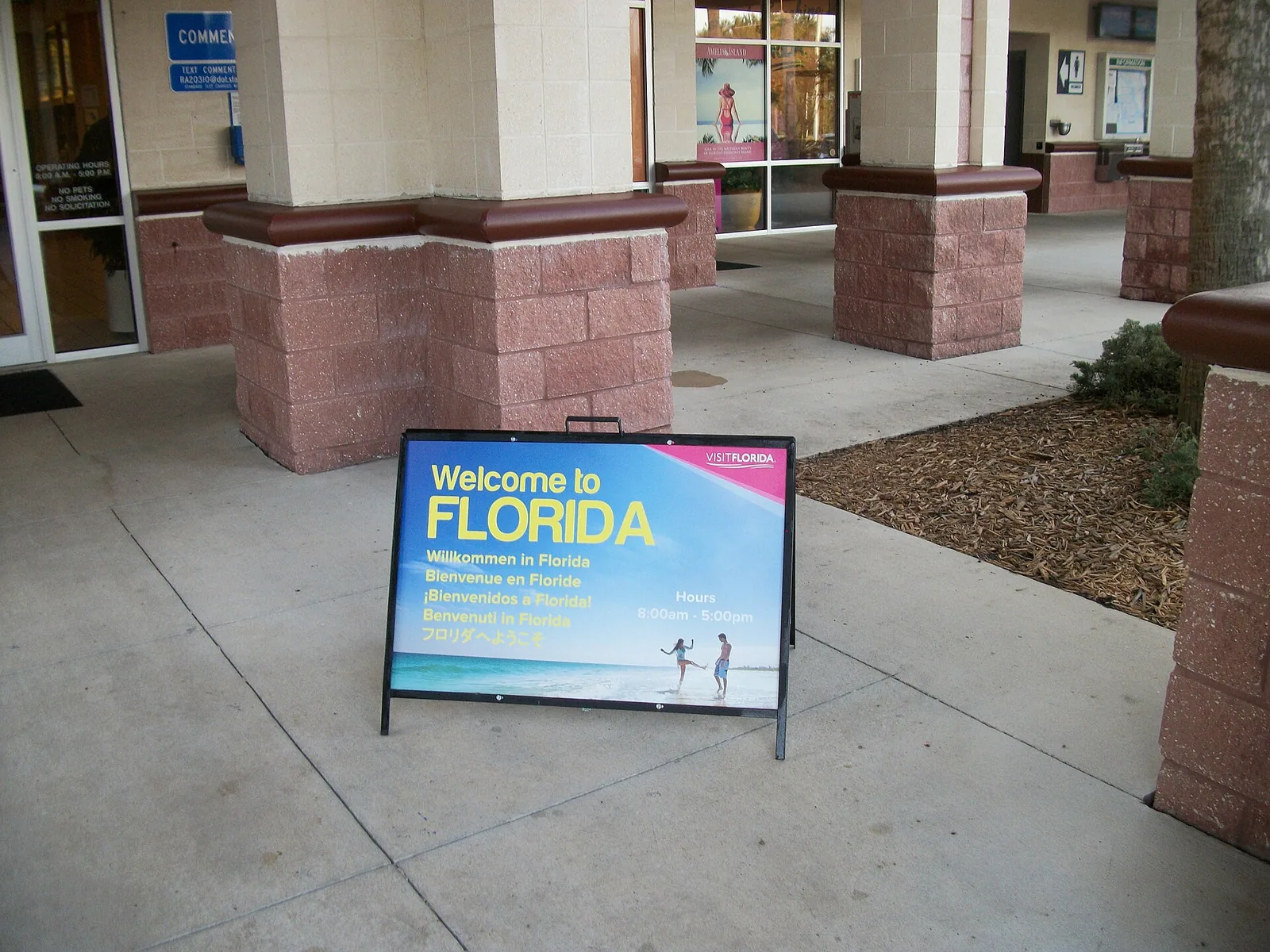
Fifth, will they understand you? The welcome sign at Florida's I-95 welcome center greets drivers in six languages, from German and French to Japanese. If a good share of your winter guests speak another language, our post on a motel website in more than one language explains when a translated booking page is worth it.
Finally, make the return trip easy to book. A snowbird checking out in November already knows roughly when they will drive home in March or April. Ask whether they would like to hold the same room for the trip back, and send one friendly email in February with a direct booking link. Our post on turning a one-night stay into a regular covers the follow-up in detail, and it applies to no one better than the couple who passes your exit twice a year.
Truck drivers and the federal rest rules
A truck driver's night is set by a clock. The federal hours-of-service rules for drivers of property-carrying trucks, in Title 49 of the Code of Federal Regulations, section 395.3, work like this.
A driver may not start driving without first taking 10 consecutive hours off duty. Once the work shift starts, the driver may not drive after 14 consecutive hours have passed, and within that window the total driving time is capped at 11 hours. After 8 hours of driving, the driver needs a break of at least 30 consecutive minutes before driving again. Over the week, a driver can't drive after 60 hours on duty in 7 days, or 70 hours in 8 days, depending on the carrier's schedule, and that weekly count can be reset by taking 34 or more consecutive hours off duty.
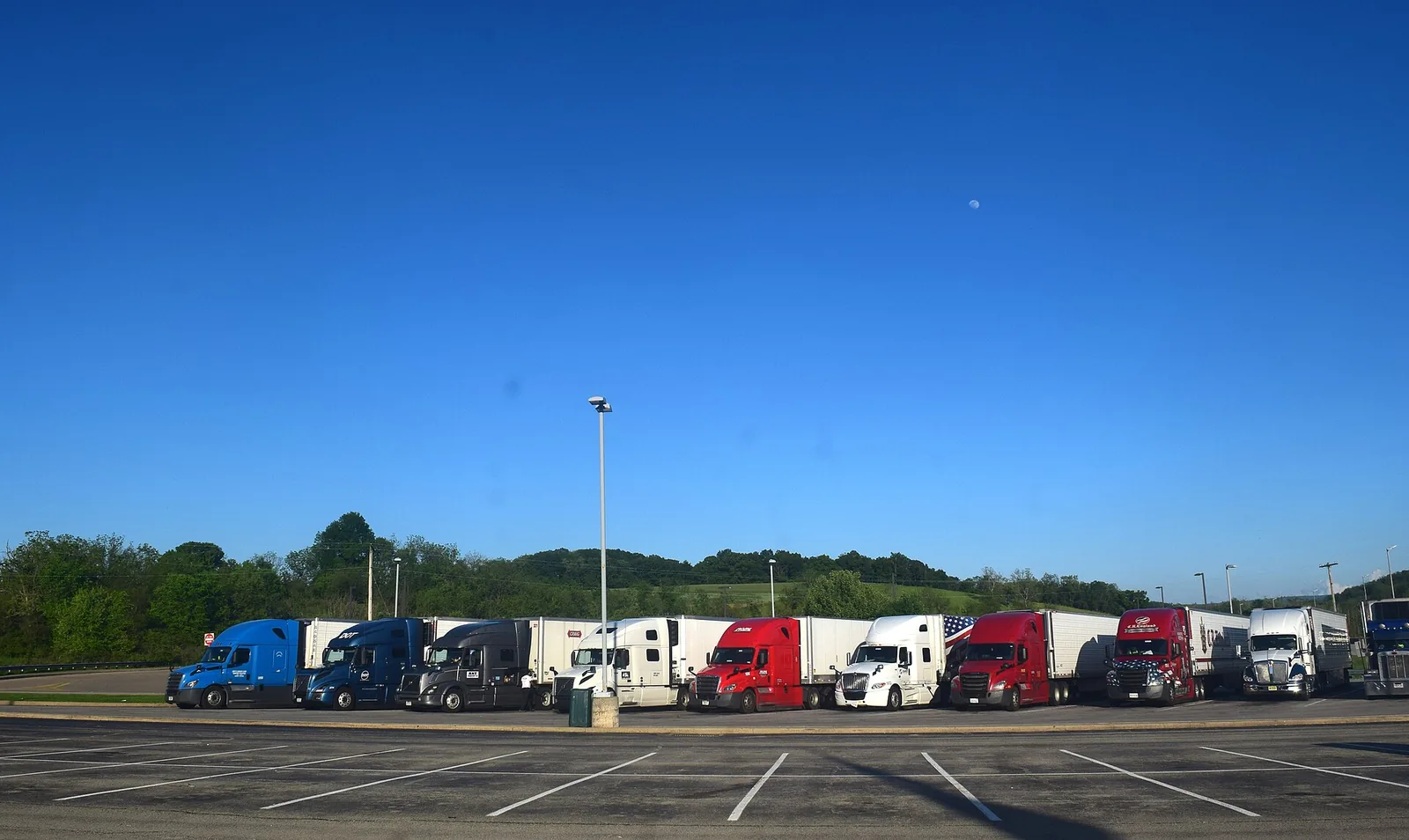
Put those rules on a map and you can see why truck stops fill up at night. A driver who started at 6 a.m. has to be parked somewhere by evening, wherever the clock runs out, whether or not there is an open space nearby. The stop is decided by hours, not by towns, which means a motel near any busy freight corridor is in the path of drivers who need to stop within a few miles of where they are right now.
Many long-haul drivers sleep in the sleeper berth behind the cab and never need a room. The drivers more likely to want a bed and a shower are the ones in day cabs without a sleeper, drivers waiting a day or two for a repair or a load, drivers taking a 34-hour restart away from home, and drivers who simply want a real bed after a hard week. Some of them are bobtailing, meaning driving the tractor without a trailer, and need far less room than a full rig.
A 34-hour restart is worth a second look, because it is a day and a half off in one place. A driver who knows your motel takes trucks, has a laundry and is walking distance from a decent meal may plan the restart around you. That is a two-night booking from a guest who often comes back on the same lane.
The search behind all of this is plain. When we started typing "motels near me" into Google in late October, its suggestions included "motels near me with truck parking." Drivers are looking. The question is whether your listing and website tell them the answer.
Truck parking on your website and your Google profile
Truck parking is one of the most searched-for things a motel can offer, and the reason is a national shortage. The Federal Highway Administration's Jason's Law truck parking survey, ordered by Congress in a 2012 transportation law, counted more than 300,000 truck parking spaces nationwide, nearly 36,000 of them at public rest areas and more than 272,000 at private truck stops. It found shortages most pronounced along major trade corridors, and the drivers and logistics staff surveyed named I-95, I-40, I-80, I-10 and I-81 as their top five corridors with shortages. Ninety percent of those surveyed reported struggling to find safe, available parking at night.
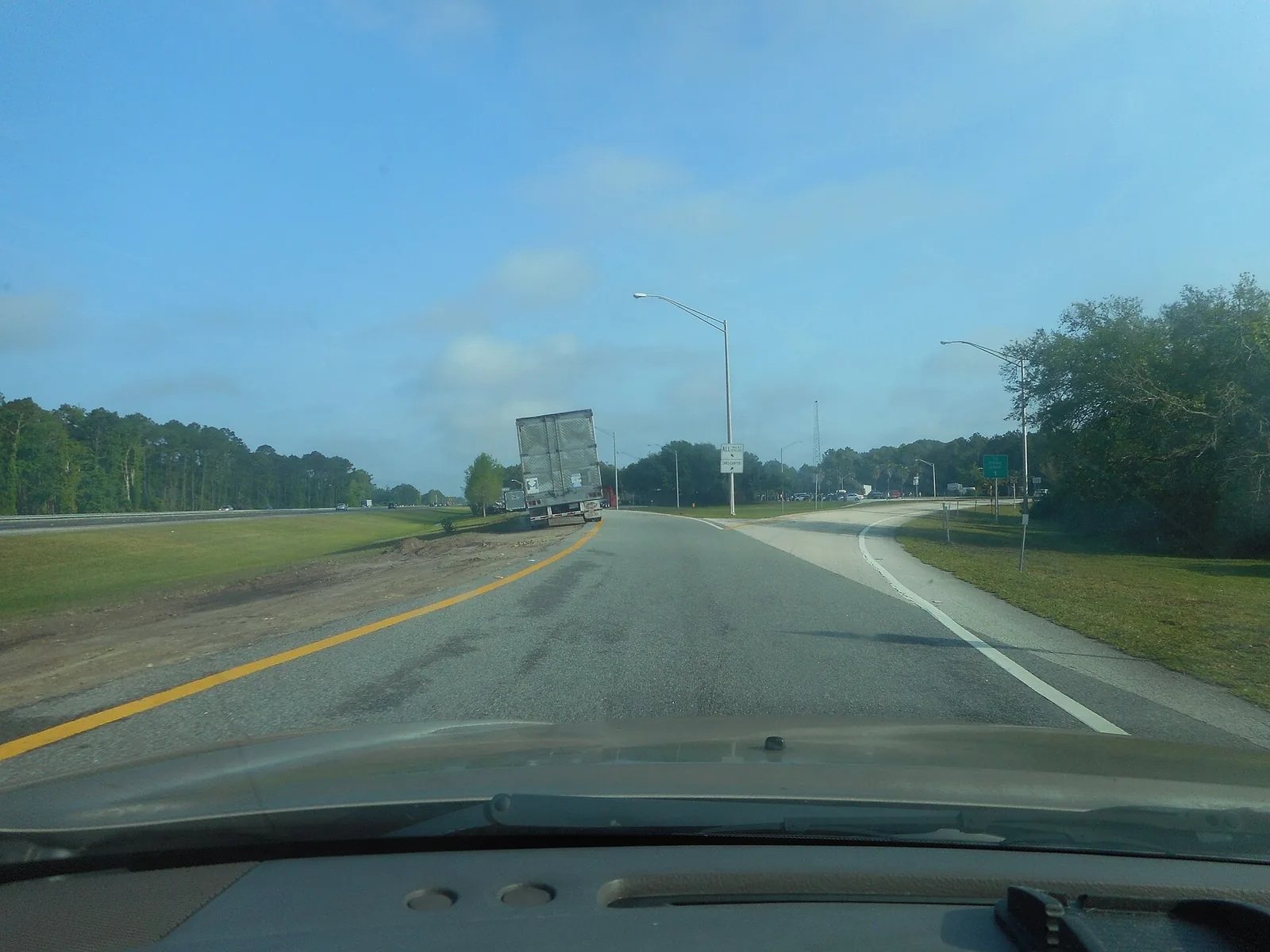
If your lot can take trucks, that shortage is your opening, as long as drivers can see it. Spell it out with specifics, because a driver needs details before committing to an exit:
- How many trucks fit, and whether that means full tractor-trailers or tractors only.
- Whether the spaces are pull-through or back-in, and where the entrance is.
- Whether parking is free with a room, and what it costs without one, if you allow that.
- Lighting, cameras and anything else that makes the lot feel safe at 2 a.m.
- How far the lot is from the exit, and the nearest diesel, scale and late-night food.
- A photo of the actual truck area, taken in daylight, showing the space and the turn.
Put the short version in three places: a "Truck and trailer parking" section on your website (its own page if you take several rigs), the description on your Google Business Profile, and your photos there. Before you advertise any of it, talk with your insurance agent and check your town's parking rules. A clear policy protects you as much as it attracts drivers.
If you only have room for a few bobtails or work pickups with trailers, say exactly that. A clear "two tractor spaces, no trailers" brings the right driver and saves the wrong one a wasted exit, and that kind of plain detail is what our local SEO work builds into every page and profile.
Work crews and the winter base
A holiday weekend can fill the motel for three nights. A crew can fill a third of it for six weeks. That difference is why crews are the steadiest winter business an independent motel can have.
Crews come from many trades. Electric utilities and their contractors send line crews. Telecom companies send fiber and tower crews. State and county road projects, bridge repairs and rail work bring construction crews, and so do pipeline jobs, plant maintenance shutdowns, wind and solar builds and cleanup work after a disaster. The jobs differ, but the guests have a lot in common.
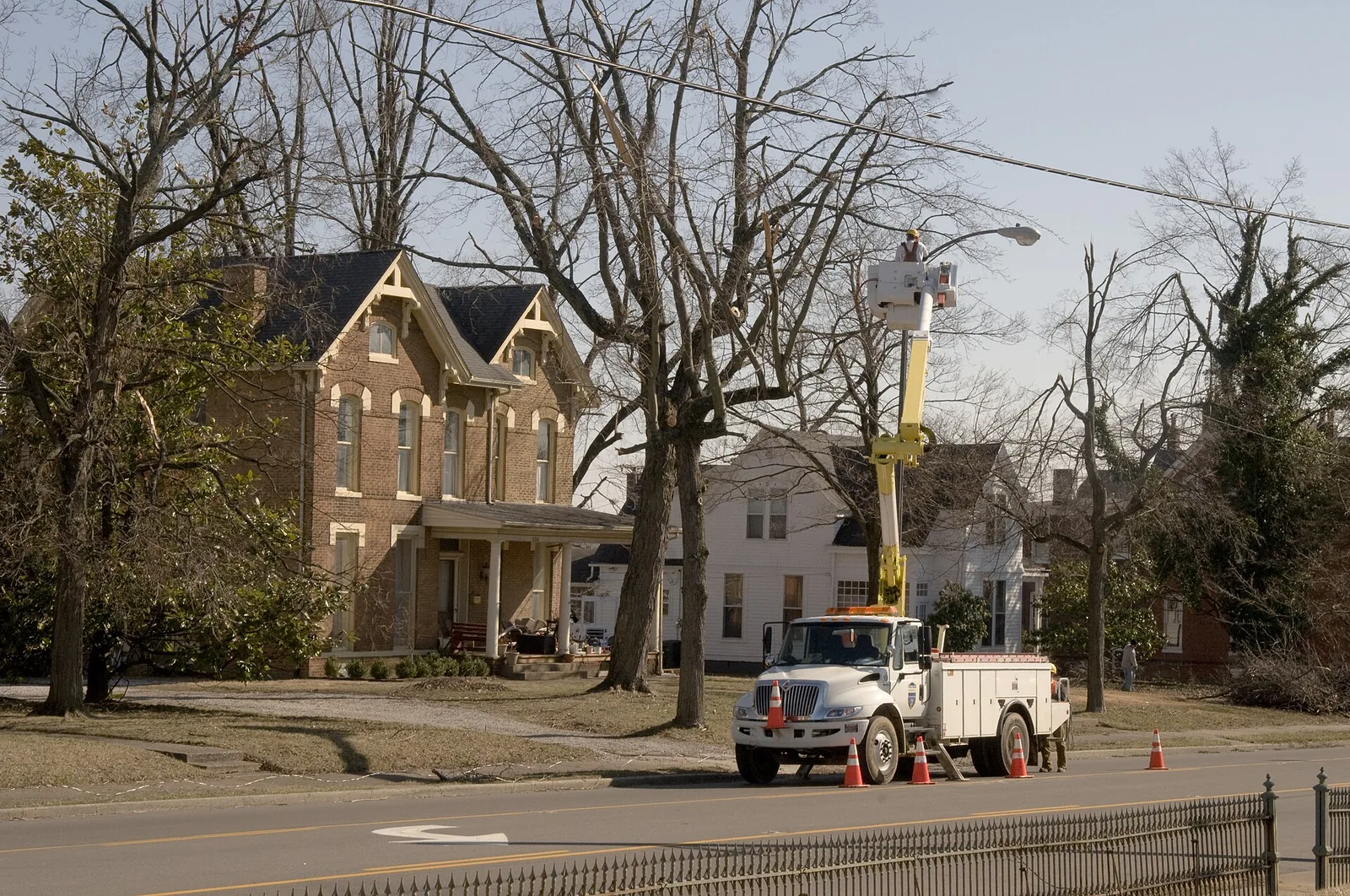
Many arrive on a Sunday night or Monday and leave on Friday. They often need one room per worker, a place to park a work truck and sometimes a trailer, a coin laundry or a laundry service, a fridge and microwave, early coffee and housekeeping that fits their hours. Many would rather have their room serviced less often than be woken at 9 a.m. after a night shift. They want the same rooms each week so they can leave things behind over the weekend, and they want one invoice for the whole crew.
In return, a crew gives you something the summer crowd doesn't: booked rooms on the slowest Tuesdays of January. A small motel that keeps even five or six rooms on a crew contract through the winter has a floor under its occupancy that holiday spikes can't provide.
Finding crews takes a little local legwork. Watch for road and bridge projects your state transportation department has awarded nearby, ask the local equipment rental yard and the diner where crews have been staying, and tell the chamber of commerce you take crew blocks. When a crew does find you, it usually comes from one of three places: a foreman's phone search, a company coordinator's list, or a crew-lodging firm that books rooms for contractors and pays the hotel. Being on those lists is a separate sales conversation, and your website is what they look at first.
That is why a crew-friendly motel needs a page that says so in plain words: the room setup, the truck and trailer parking, laundry, weekly billing, a contact who answers, and a short form for the dates and the number of rooms. Our post on building regulars covers the follow-through that turns one crew into a standing account.
Storm restoration crews
One kind of crew deserves its own plan, because it arrives with almost no warning and needs rooms the same night. When ice, wind or a hurricane takes down power lines, utilities call in line crews from other states.
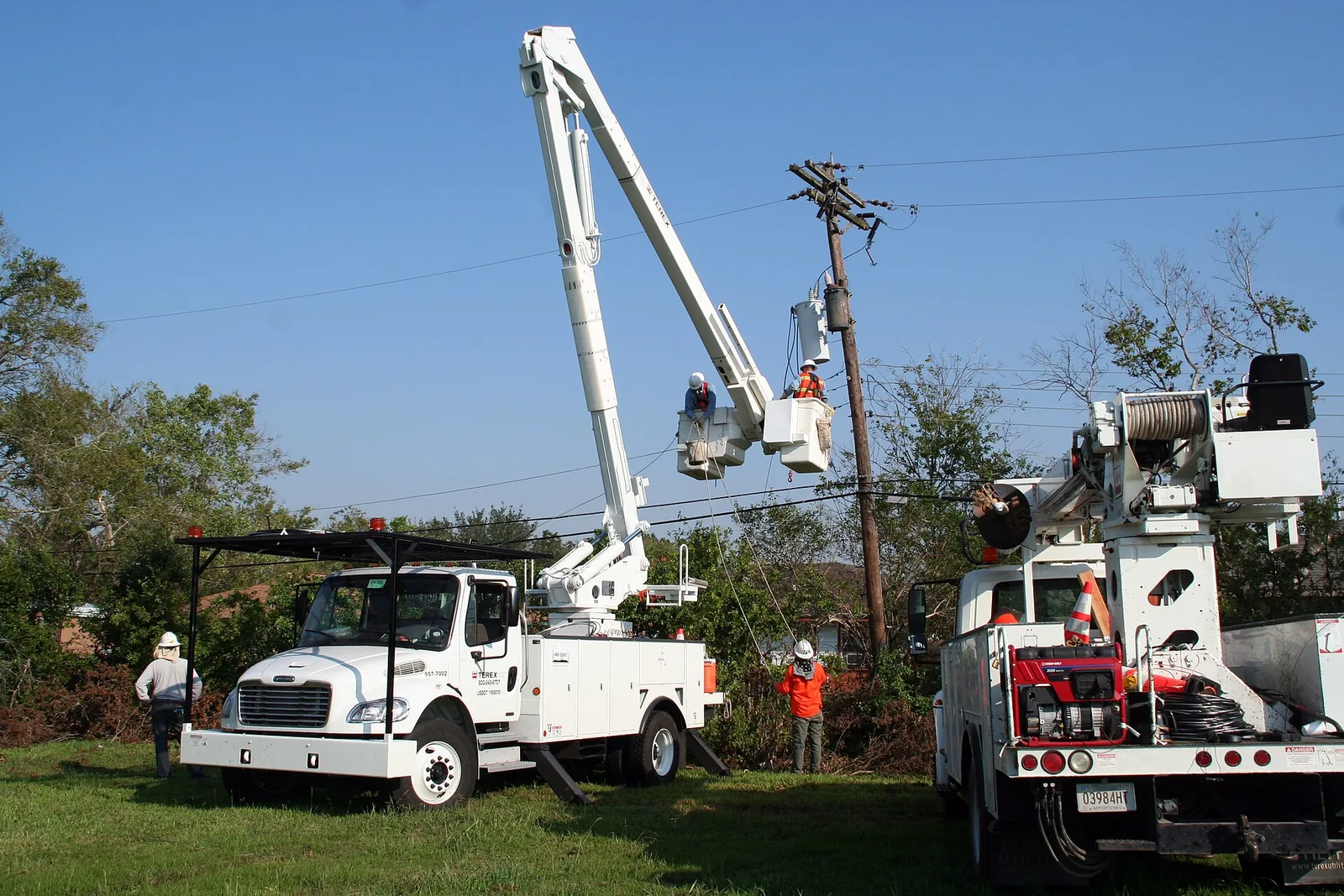
The Bureau of Labor Statistics describes the work plainly in its guide to line installers and repairers: crews working on interstate power grids may travel long distances, and in emergencies or after storms they may have to travel to the affected areas and work long hours for several days in a row. FEMA's photo archive is full of examples, like an Arizona utility crew restoring power in Houston after Hurricane Ike in 2008, and crews in Madisonville, Kentucky, still bringing street lights back three weeks after the January 2009 ice storm.
Winter weather makes these call-ups more likely across a large part of the country. The Federal Highway Administration notes that more than 70 percent of the nation's roads are in snowy regions, and nearly 70 percent of the population lives in them.
Restoration crews look for the same things as other crews, only faster. A coordinator may be booking 20 or 40 rooms by phone from a staging yard at midnight. The motels that get those calls are the ones that answer the phone after hours, show real availability online and can take a company card for a block of rooms without a fuss.
Three things help you be that motel. First, a crew page on your website with the phone number a coordinator should call, the number of rooms you can block and the parking you have for bucket trucks and trailers. Second, a short internal plan: who answers the phone during a storm, how you hold rooms, and how you bill. Third, fair pricing, set in advance. In California, for example, Penal Code section 396 bars raising the price of hotel and motel lodging by more than 10 percent after an emergency is declared, with limited exceptions, and the state's Attorney General has urged hotels to freeze prices in their booking systems so automatic pricing doesn't push rates past the limit. Other states have their own rules. Learn yours before the next storm, and know how to pause any automatic rate changes in your booking software.
Restoration work also tends to end the way it started, all at once. When the lights are back on, the crews move to the next job, so keep your regular bookings flowing instead of handing every room to an open-ended block. Our guide to getting more direct bookings covers how to keep those other guests coming.
Per diem and what a crew can pay
Many traveling workers are reimbursed under a daily allowance, called per diem, and knowing the number in your county helps you price crew rooms so they are easy to approve.
The federal rates are set by the General Services Administration. Its notice for fiscal year 2027, published in the Federal Register on September 10, 2026, applies to travel from October 1, 2026 through September 30, 2027. It raised the standard lodging rate by $3, to $113 a night, after a rate freeze in fiscal 2026, and kept the standard meals and incidentals rate at $68 a day. The standard rate covers most of the country, and 295 non-standard areas have a higher lodging maximum.
Those numbers matter beyond federal employees. Under the Federal Acquisition Regulation, section 31.205-46, a government contractor's costs for lodging, meals and incidentals are allowable only to the extent they don't exceed the maximum per diem rates in the Federal Travel Regulation. So a road crew working on a federally funded job, or an inspector traveling for an agency, may have a hard ceiling on what they can spend on your room.
Private companies set their own travel policies. Some reimburse the actual room bill, and some pay a flat daily allowance, in which case a worker who spends less on the room may keep the difference, depending on the company's rules. Either way, a clean, fairly priced motel is an easy yes. The coordinator will tell you the number if you ask, and asking is the fastest way to know whether a crew is worth chasing.
The practical step is to look up your own county on the GSA per diem site and write the lodging rate on the wall of your office. If your crew rate sits at or under it, say so on your crew page: "Our weekly crew rate is within the federal per diem for our county." That one line answers a question every government-funded traveler and every cautious coordinator is asking, before they ever pick up the phone.
Keep one caution in mind. Per diem rates change each fiscal year and can be adjusted mid-year, so check the GSA site before quoting a long contract, and date any rate you publish.
Weekly and monthly rates
When we typed "motels near me" into Google in late October, two of the suggestions were "with weekly rates" and "with monthly rates." Think of the crews, traveling nurses, workers between apartments and snowbirds who want a month somewhere warm without a lease. If you offer longer stays, say so where those searches land.
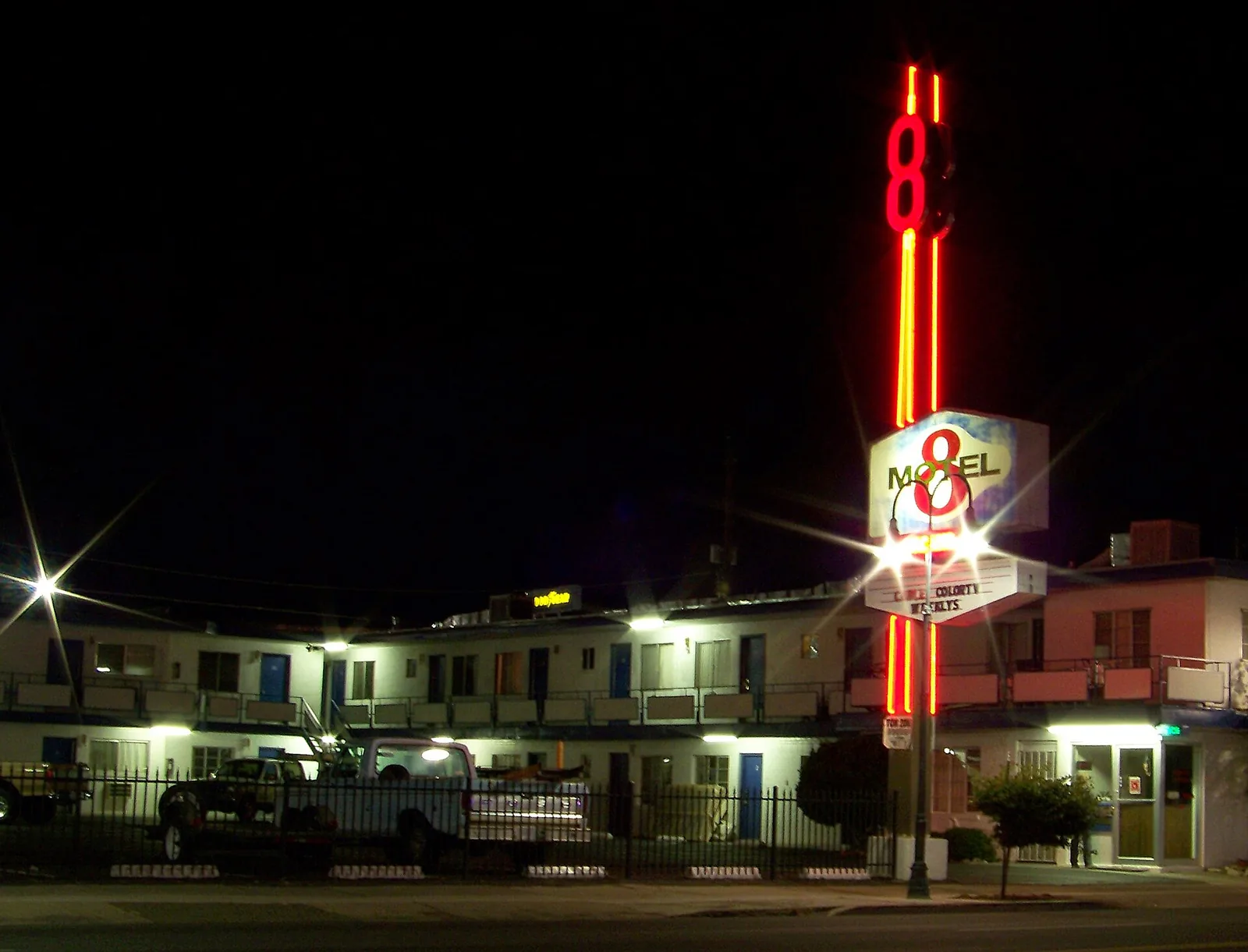
A good weekly rate is lower than seven nights at your nightly rate but not so low that it costs you a full-rate weekend. Start from what the room actually earns in a typical winter week, not your peak price, and build the weekly rate from there. One simple approach: take a modest discount off seven nights, require payment weekly in advance, adjust the housekeeping schedule and hold back a handful of rooms for nightly guests. Write the terms on the website in plain words: what the rate includes, how often the room is cleaned, the deposit, the pet policy and the checkout day.
Long stays can change your taxes, and the rules are set state by state, so check yours before you publish a monthly price. Two examples show how different they can be. In Texas, the Comptroller says a permanent resident who occupies a room for at least 30 consecutive days is exempt from the state hotel occupancy tax. A guest who notifies the hotel in writing beforehand is exempt from that date; a guest who doesn't pays the tax for the first 30 days and is exempt after that. Any interruption in the stay voids the exemption, and the hotel is liable if a guest fails to stay the full 30 days, which is why many hotels collect the tax and refund or credit it later.
Florida works differently. The state's 6 percent tax on transient rentals applies to hotels and similar lodging, and the exemption in section 212.03 of the Florida Statutes covers a guest with a bona fide written lease for continuous residence longer than six months. A one-month winter stay in Florida is taxed like any other.
Two more questions belong with your accountant and attorney: local county lodging taxes, and whether a long stay could give a guest tenant rights under your state's law. Settle both before you advertise monthly stays. Then put the result on your site and keep it current.
Direct billing, invoices and the crew coordinator
A crew booking is a business transaction, and the motel that makes the paperwork easy gets the next job. The person you are really selling to is often a coordinator in an office who has never seen your property.
Here is what that person usually needs from you:
- One contact with a direct phone number and an email that someone checks daily.
- A rooming list you can update each week as workers rotate in and out.
- A card authorization form, or a direct-billing setup for companies you approve.
- One invoice per week for the whole crew, with a line per room and per night.
- Your business details ready to send, usually a W-9 for American companies.
- A clear process for tax-exempt guests, such as government agencies, with the certificate your state requires.
None of this needs fancy software. A shared spreadsheet and a simple invoice template will carry a small motel a long way. What matters is that the coordinator never has to chase you for a receipt.
Your website is where the coordinator decides whether to call. A "Crews and long stays" page should show the rooms (with real photos), parking for work trucks, laundry, the weekly rate or how to ask for it, billing options and a short form: company name, number of rooms, start date, expected length and billing method. Send that form to an inbox you watch, and reply the same day, because the coordinator is usually calling three other motels too.
Your booking engine can help or hurt here. Some engines handle group blocks and long stays well, others don't handle them at all, and a coordinator who hits a wall online calls the next motel on the list. Our booking engine setup work starts with exactly this kind of question: who books you, how, and for how long. If you are still choosing a system, the handbook's guide to booking engines for small motels lays out what to compare.
Finally, ask every crew that stays with you for a review and for the next job. A foreman who had a good six weeks is your best salesperson for the next project in your county.
Google Maps and the "motel near me tonight" search
For a driver at dusk, the booking usually starts on a map. Google's own help pages explain how the map decides which businesses to show, and it comes down to three things.
Relevance is how well your Business Profile matches what someone searched for. Distance is how far you are from the person searching, or from the place they typed. Prominence is how well known your business is, and Google says links from other websites and your number of reviews and ratings both feed into it. Google is also direct about one thing: there is no way to request or pay for a better local ranking.
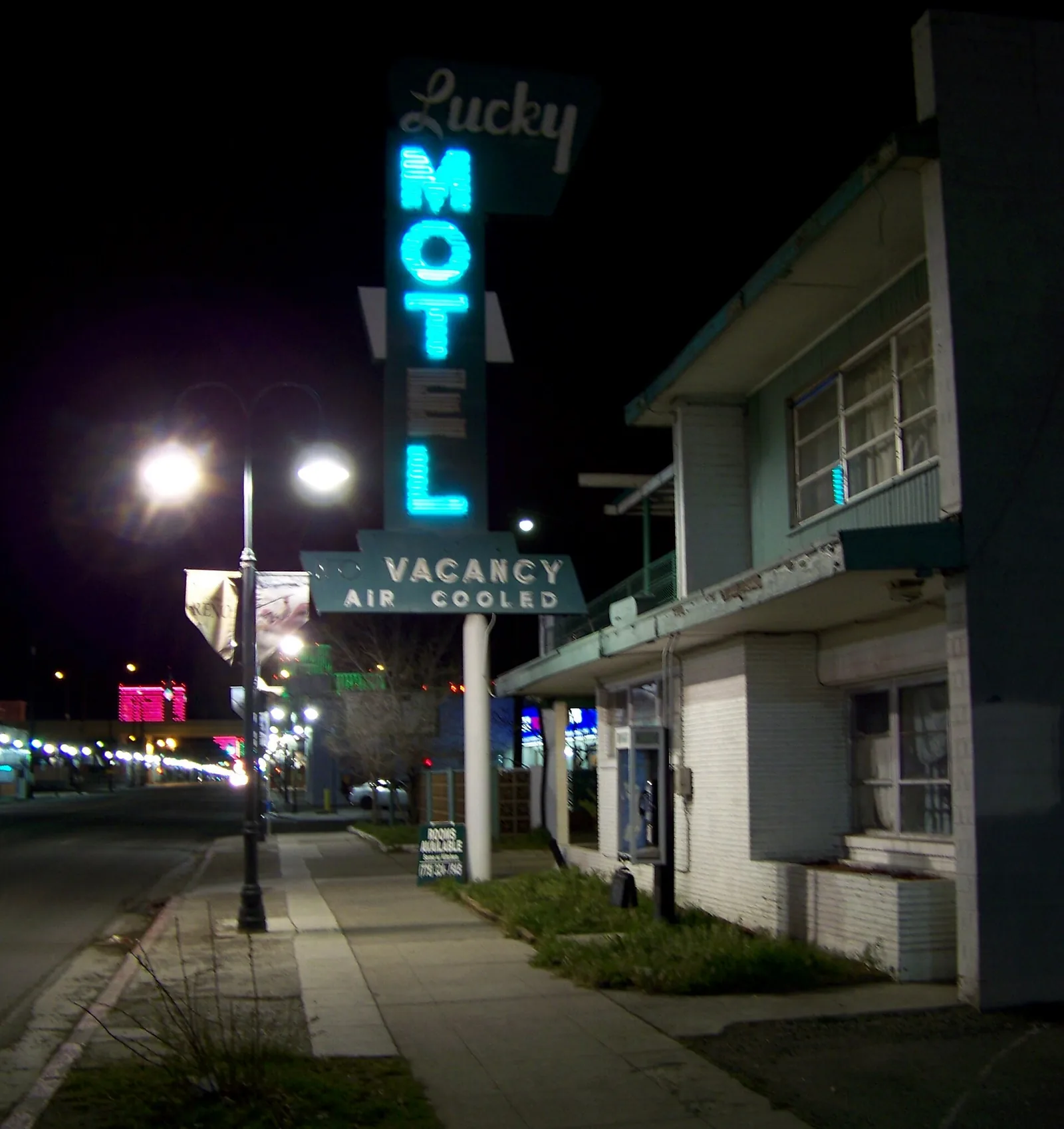
You can't move your building, so distance is fixed. Relevance and prominence are where the work is, and winter is the season to do it, because the winter searches are so specific. When we typed "motels near me" into Google in late October, the suggestions included "for tonight," "with weekly rates," "with monthly rates," "with truck parking," "that accept dogs" and "that allow pets." Each of those phrases is a person telling Google exactly what they need.
Relevance means your profile and website say, in plain words, the things those searchers want: weekly rates if you offer them, truck parking if you have it, pets if you take them. Google's guidance is that businesses with complete and accurate information are more likely to appear in local results. A profile that lists only your address and phone number gives it very little to match.
Prominence is slower. It comes from steady, recent reviews, replies to those reviews, real photos and links to your site from other places, such as your chamber of commerce, the local tourism office and the events you sponsor. Our post on Google as your front desk covers the basics, and the handbook's full Google Business Profile setup guide walks through every field.
"Tonight" deserves its own note. A driver searching for a room tonight wants two things in a few seconds: proof you have a room and a way to grab it. That means current availability where they can see it, a booking button that works on a phone and a number that someone answers. Our post on designing for the walk-up guest is about exactly this moment.
Your Google profile in winter
Google treats lodging profiles a little differently from other businesses, and a few of those differences matter in winter.
Business hours are the first. Google's help page for hotel profiles says hotels can't edit their business hours, because hotels are open 24 hours to their guests. So you can't use hours to tell drivers your office closes at 11 p.m. Instead, use the check-in and check-out times, which Google's 2026 best-practices playbook for hotels says you can edit along with your amenities, and explain late arrivals in your profile description and on your website: how a guest checks in after the office closes, and the number to call.
Amenities are the second. Google shows a summary of a hotel's amenities on Search and Maps, and a verified owner can correct it under Hotel details. Google also shows "hotel highlights," small icons for features such as Pet Friendly, Free Wi-Fi and Free Parking. Google says not every hotel will get highlights, but the amenity list behind them is yours to keep accurate. Check that pets, parking and Wi-Fi say what is true at your motel this winter.
Posts are the third, and the rule surprises owners. Google's hotel playbook says hotels can't create "offer" posts, or any post that mentions or links to deals, promotions, special offers or discounts. So a "Winter weekly special" post is out. Post updates instead: the lot is plowed, the coffee is on at 5:30, the café is open Christmas Eve, the crew rooms have new mini fridges. The same playbook suggests posting at least once a week.
Prices are the fourth. Google's help page says the prices and booking links on a hotel profile come from Google Hotel Ads and free booking links. Free booking links let a hotel show its direct rate beside the online travel agencies, and Google says they are set up through a connectivity partner, often your booking engine or channel manager. Ask yours whether it is connected, because a winter driver comparing prices on the map should see your direct rate next to everyone else's.
The rest is housekeeping. Use "Motel" as the primary category (Google allows one primary and up to nine more), add a text-message number if someone will answer it, add winter photos and keep replying to reviews. The handbook's guide on responding to reviews has the wording.
Pages a winter traveler looks for on your website
Every search in the last two chapters needs a page to land on. Most motel sites have a home page, a rooms page and a contact page, and that is not enough to match what winter travelers are asking.
Here are the pages we would add or strengthen before December, each one written with real details so it helps a traveler and gives Google something specific to match:
- Directions from the interstate: the exit number from both directions, the turn after the ramp, the drive time and a landmark. This is the page a tired driver opens most.
- Truck and trailer parking: what fits, where, the rules and a photo of the lot.
- Crews and long stays: room setup, parking for work trucks, laundry, weekly billing, the contact and a request form.
- Weekly and monthly rates: the terms in plain words, and the taxes as they apply in your state.
- Pets: the fee, the limits, which rooms, where to walk the dog and the rule about leaving a pet alone.
- Late arrival: how to check in after the office closes, and what to do if the weather holds you up.
- Winter nights nearby: which restaurants are open late and on the holidays, the nearest 24-hour pharmacy and fuel.
Each page should have its own clear title, a booking button and a phone number. Link them from your home page and from each other, so a crew coordinator reading about parking finds the long-stay page next.
A caution on quantity: do not make one thin page per search phrase. A page called "motels near me with truck parking" that says nothing more than "we have truck parking" helps nobody. One solid page with the facts beats five empty ones.
Two of our posts cover the moment these pages serve. The arrival connects your website to the moment a guest pulls in, and the handbook's website checklist is a quick way to see what your current site is missing.
Dogs on the drive south
A lot of winter drivers bring the dog, from snowbirds who will be away for months to holiday families with a pet in the back seat. Florida plans for them: the southbound I-75 rest area in Pasco County has a fenced dog park, and so does the northbound side.
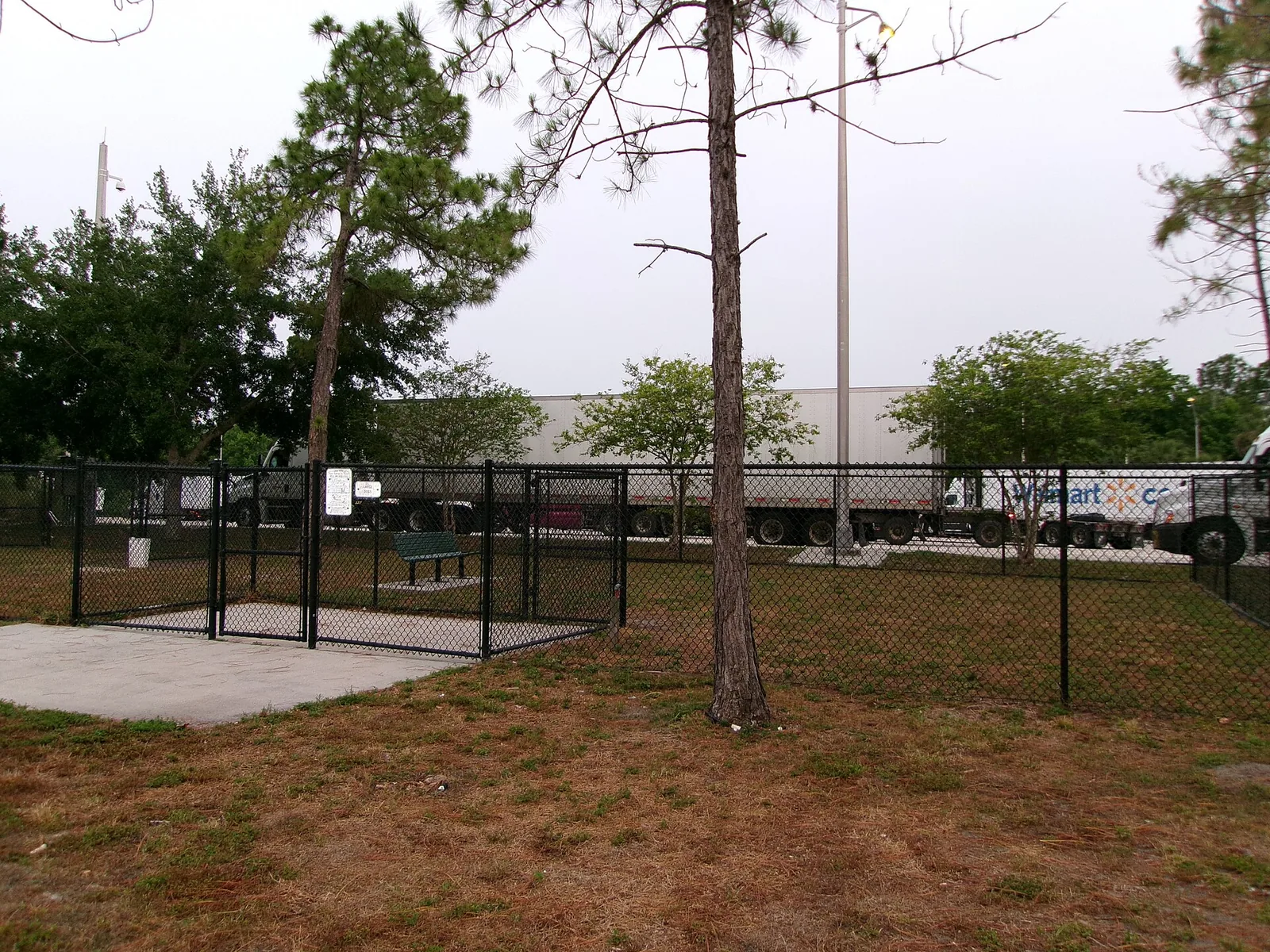
For a motel, a clear pet policy is one of the easiest ways to win a winter night, because "motels near me that accept dogs" and "that allow pets" are exactly what people type. The word clear matters most. A driver with a 70-pound dog in the back wants to know before booking whether that dog is welcome, and a vague "pets allowed, restrictions apply" sends them to the next listing.
Your pet page should answer:
- The fee, per night or per stay.
- Size or weight limits, and how many pets per room.
- Which rooms take pets, ideally ground-floor rooms near an exit door.
- Where to walk the dog, and where the bags and the trash can are.
- Whether a pet can stay alone in the room, and for how long.
- Any breed or type limits your insurance sets.
On Google, make sure your amenities say pets are allowed if they are, so the Pet Friendly highlight has a chance to show. Add one photo of the walking area. On your booking engine, let guests add the pet when they book, so the fee isn't a surprise at the desk.
We wrote a full post on winning the traveler with a dog in the back seat, with the details on rooms, cleaning and pricing. In winter, add one line to it: the nearest spot to walk a dog after dark that is lit and away from the traffic.
Snow, ice and the night arrival
Bad weather turns a lot of passing drivers into overnight guests. The Federal Highway Administration's road weather figures show why: freeway speeds drop by 3 to 13 percent in light snow and by 5 to 40 percent in heavy snow, and snow accumulation cuts lane capacity and adds delay. A driver who planned to reach the next big city decides, somewhere around your exit, that they are done for the day.
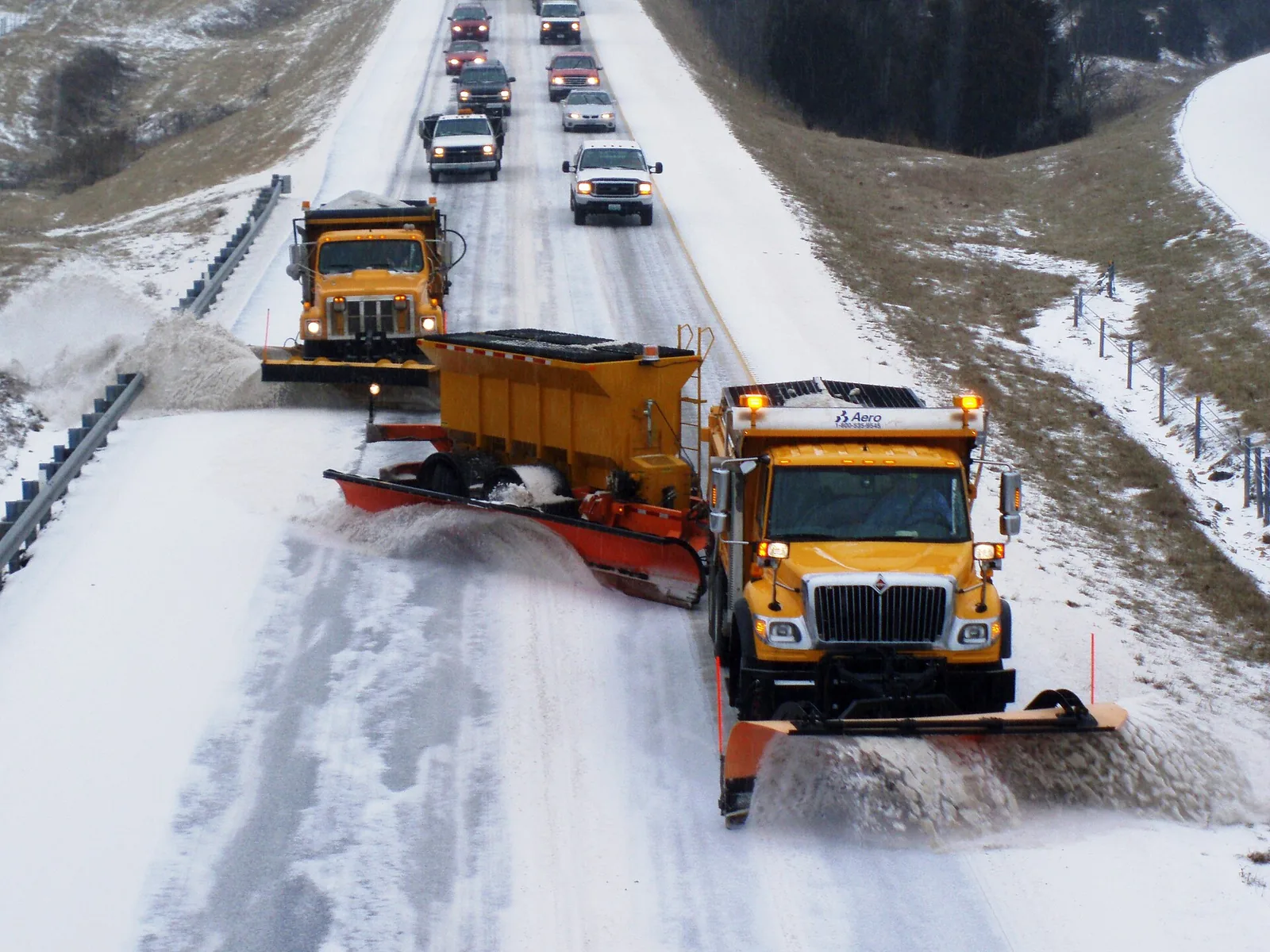
Those guests decide fast, and they decide from what they can see. A few things make you the obvious choice:
- A cleared, salted lot and a lit entrance. The sign at night is your best ad, and an unplowed lot reads as closed.
- Real availability online. If you are full, say so; if you have rooms, the booking button should prove it.
- A phone that someone answers in the evening, or a clear after-hours check-in process posted on the site and the door.
- A winter photo on Google and your website: the lot cleared, the lights on, snow on the roofline. It tells a driver you are open and ready.
- If you are in the north and have engine block heater outlets at the parking spaces, say so. Drivers from cold country look for them.
Weather nights also produce your most grateful guests, and grateful guests write reviews. Hand them a card with your review link at checkout, or text it, while the memory of a warm room on a bad night is fresh.
Keep your weather message calm and practical. A short "If the weather holds you up, call us and we'll hold your room" on your late-arrival page does more for bookings than any warning, and it is a promise you can easily keep. Our photography shot list has the winter exterior shot, and our post on the walk-up guest covers the same-night booking path.
Pricing the holiday weeks
Winter pricing is a mix of a few very busy nights and many quiet ones. Price each kind on purpose.
Start with the calendar. Using the federal holiday schedule, the 2026-2027 winter falls like this:
- Thanksgiving is Thursday, November 26, 2026. The heavy driving runs the Tuesday and Wednesday before and the Sunday after, if 2026 follows the pattern AAA and INRIX reported for 2025.
- Christmas is Friday, December 25, 2026, which makes a three-day weekend.
- New Year's Day is Friday, January 1, 2027, which makes another.
- Martin Luther King Jr. Day is Monday, January 18, 2027.
- Washington's Birthday, widely called Presidents' Day, is Monday, February 15, 2027.
On the busy nights, let your rate rise with demand you can see in your own booking pace and in what nearby properties are charging, not with a guess. On the quiet nights in between, your base is the crews, the weekly guests and the corridor travelers, and a fair, steady rate keeps them. Our post on setting your rates without a revenue manager walks through how to read demand week by week.
Two habits pay off in winter. First, keep the direct rate at least as good as the rate on the travel apps, and give direct bookers something small and real, like a late checkout or first pick of the ground-floor rooms. Our post on the book-direct deal has the details. Remember that Google won't let a hotel advertise a discount in a profile post, so put the perk on your own website, where you control the words.
Second, protect a few rooms on the biggest nights for the walk-up and phone guests who pay your full rate and book direct. A sold-out motel on the Sunday after Thanksgiving is good, but a motel that sold every room weeks earlier through an app, at a commission, may have left money on the table. The handbook's guide to OTA commissions shows how much.
Finally, write your holiday hours somewhere guests will see them: the café, the office and the after-hours check-in. Christmas Eve is a night when travelers need to know who is open, and a plain answer on your website builds trust.
Planning the 2027 season in January
The quiet weeks after New Year's are the best time all year to fix the things that will earn money from spring to fall. Here is how we would use them.
Look back first. Your Google Business Profile's performance page shows how people found you and what they did: the searches they used, profile views, calls, direction requests, website clicks and, for lodging, clicks on your booking link. Compare November and December with the summer. If calls spiked on storm nights, your phone is your booking engine on those nights, and the after-hours plan matters. If website clicks were high but direct bookings were low, the booking path on your site is losing people.
Then look at your own records. Which crews stayed, for how long, and at what rate? Which snowbirds came through both ways? Which nights sold out, and how early? Write down the answers while you remember them.
Next, plan the spring and summer. In much of the country, outdoor construction picks up as the ground thaws, so January is a good month to ask the crews who stayed this winter what they have coming, and to introduce yourself to the companies you saw working nearby. Update your rate calendar for 2027 using what you learned in 2026. Pick the dates of the events in your town that fill rooms, and price them now.
Then fix the website. Winter is when you have time for new photos of the rooms you renovated, a rewrite of the rooms page, the crew page you never got around to and a booking engine that actually works on a phone. Our post on what to keep updated on your motel website covers the routine, and our upkeep plan handles it for owners who would rather not.
Finally, email the guests who stayed this winter. A short note in January or February, with a direct booking link and one small reason to book direct, reaches people who already know and like your motel. The snowbirds heading north in March and April are the first to read it.
If you want a second pair of eyes on any of this, our free website review checks your site against the things winter travelers and crews look for, and there is no obligation.
A November checklist
If you only have an afternoon, do these before the Thanksgiving rush. Each one is small, and together they cover most of what wins a winter driver.
- Check your Google profile: category, phone, website link, check-in and check-out times, and every amenity, especially pets, parking and Wi-Fi.
- Write a late-arrival note in your profile description and on your website: how to check in after the office closes, and the number to call.
- Add three winter photos to Google: the lit sign at dusk, the cleared lot and a made room with the lamps on.
- Put the exit number for both directions on your home page and your directions page.
- If you take trucks, add a truck parking section with the number of spaces, the size limits and a photo.
- Write or update your crew and long-stay page, with a request form that goes to an inbox you watch.
- Look up your county's federal per diem lodging rate and decide where your crew rate sits.
- Confirm with your accountant how weekly and monthly stays are taxed in your state.
- Make sure your pet policy is on the website in full, and that your booking engine lets guests add a pet.
- Test your booking path on your own phone, on cellular data, standing in your parking lot after dark.
- Ask your booking engine or channel manager whether your free booking links on Google are switched on.
- Decide who answers the phone on storm nights and holiday nights, and write it down.
- Post a Google update each week through the holidays, with no prices or discounts in it.
- Set your Thanksgiving, Christmas and New Year's rates now, and hold a few rooms on the biggest nights for direct guests.
That list is most of what we do for a motel getting ready for winter. If you would rather hand it off, tell us about your motel and we'll send a fixed quote within one business day.
Questions owners ask
When is holiday road traffic heaviest for motels?
In AAA's 2025 forecasts and INRIX's traffic guidance, the heaviest driving came on the Tuesday and Wednesday afternoons before Thanksgiving, the Sunday after it, the weekend before Christmas and the days right after Christmas. The holidays themselves were expected to be light. AAA had not released its 2026 forecasts when this was written, so treat these as a pattern and watch your own booking pace.
Do truck drivers stay at motels?
Many long-haul drivers sleep in the sleeper berth behind the cab, but plenty of drivers still want a room: drivers in day cabs without a sleeper, drivers waiting on a repair or a load, drivers taking a 34-hour restart away from home and drivers who want a real bed and a shower. A motel that clearly states its truck parking gives those drivers a reason to choose it.
How do I get work crews to book my motel?
Make it easy to say yes. Put a crews and long-stay page on your website with the room setup, parking for work trucks and trailers, laundry, weekly billing and a request form. Know your county's federal per diem lodging rate. Then tell the people crews ask: the equipment rental yard, the chamber of commerce, nearby contractors and the companies working on local road projects.
What is the federal per diem lodging rate for 2027?
For fiscal year 2027, which runs from October 1, 2026 through September 30, 2027, the General Services Administration set the standard lodging rate at $113 a night and the standard meals and incidentals rate at $68 a day. There are 295 non-standard areas with a higher lodging maximum. Look up your own county on the GSA per diem site before you quote a crew.
Do weekly or monthly stays change the taxes I collect?
They can, and the rules differ by state. In Texas, a guest who stays at least 30 consecutive days can be exempt from the state hotel occupancy tax. In Florida, the transient rental tax applies unless the guest has a bona fide written lease for longer than six months. Check your state's rules and your county's lodging tax with your accountant before you advertise long stays.
Can I set holiday hours on my motel's Google profile?
Google's help page for hotel profiles says hotels can't edit business hours, because lodging is open 24 hours to its guests. Instead, keep your check-in and check-out times current, and explain late arrivals in your profile description and on your website: how a guest checks in after the office closes, and which number to call.
Can I post a winter discount on my Google profile?
No. Google's 2026 best-practices playbook for hotels says hotels can't create offer posts, or any post that mentions or links to deals, promotions, special offers or discounts. Post plain updates instead, such as a cleared lot, early coffee or holiday cafe hours, and put your book-direct perk on your own website, where you control the wording.
What should my website say for winter travelers?
The things they search for. Give your exit number for both directions, current availability with a booking button that works on a phone, a late-arrival note, your pet policy in full, truck and trailer parking if you have it, and a crews and long-stay page with weekly terms. Each needs real details, so it helps the traveler and gives Google something specific to match.
Sources
- AAA Newsroom, AAA Thanksgiving Travel Forecast 2025, November 17, 2025. https://newsroom.aaa.com/2025/11/aaa-thanksgiving-travel-forecast-2025/
- AAA Newsroom, AAA Year-End Holiday Travel Forecast, December 10, 2025. https://newsroom.aaa.com/2025/12/aaa-year-end-holiday-travel-forecast/
- Code of Federal Regulations, 49 CFR 395.3, maximum driving time for property-carrying vehicles (Legal Information Institute text). https://www.law.cornell.edu/cfr/text/49/395.3
- Federal Highway Administration, Jason's Law Truck Parking Survey Results and Comparative Analysis, executive summary. https://ops.fhwa.dot.gov/Freight/infrastructure/truck_parking/jasons_law/truckparkingsurvey/es.htm
- Federal Highway Administration, Road Weather Management, Snow and Ice. https://ops.fhwa.dot.gov/weather/weather_events/snow_ice.htm
- Federal Highway Administration, Interstate route log and finder list, Table 1, main routes. https://www.fhwa.dot.gov/planning/national_highway_system/interstate_highway_system/routefinder/table01.cfm
- U.S. Bureau of Labor Statistics, Occupational Outlook Handbook, Line Installers and Repairers. https://www.bls.gov/ooh/installation-maintenance-and-repair/line-installers-and-repairers.htm
- General Services Administration, Notice of Per Diem Bulletin FTR 27-01, fiscal year 2027 CONUS rates, Federal Register, September 10, 2026. https://www.federalregister.gov/d/2026-18439
- Federal Acquisition Regulation, 31.205-46, Travel costs. https://www.acquisition.gov/far/31.205-46
- Texas Comptroller of Public Accounts, Hotel Occupancy Tax frequently asked questions. https://comptroller.texas.gov/taxes/hotel/faq.php
- The Florida Statutes 2025, section 212.03, transient rentals tax. https://www.flsenate.gov/Laws/Statutes/2025/0212.03
- California Attorney General, letter to the California Hotel and Lodging Association on Penal Code section 396, October 16, 2017. https://oag.ca.gov/system/files/attachments/press_releases/10-16-17%20CA%20Hotel%20and%20Lodging%20Assn_Anti-Price%20Gouging%20Letter%20from%20AG%20.pdf
- Google Business Profile Help, Tips to improve your local ranking on Google. https://support.google.com/business/answer/7091
- Google Business Profile Help, Get started with a Business Profile for your hotel. https://support.google.com/business/answer/9177958
- Google, Hotels GBP Best Practices Playbook 2026 (PDF). https://services.google.com/fh/files/helpcenter/hotels_gbp_best_practices_playbook_2026.pdf
- Google Business Profile Help, Understand your Business Profile performance and insights. https://support.google.com/business/answer/9918094
- U.S. Office of Personnel Management, Federal Holidays. https://www.opm.gov/policy-data-oversight/pay-leave/federal-holidays/
- Google search suggestions for the phrase motels near me, checked October 29, 2026.
- Cover photo: Icicles on motel's roof in Tahoe, California by Brocken Inaglory, CC BY-SA 3.0.